Built for the rooms where communities already gather.
We started Valen VR with a simple observation: the public library is one of the last open, trusted, un-clinical spaces left. Exactly where calm should be available to anyone, for free, without an appointment.
Founded by researchers from
 Harvard University
 Boston University
Our reason
We built the thing we couldn't find.
Both of us ran into the same wall in high school. We were struggling with our own mental health, and when we went looking for help, we found almost nothing that was free, immediate, and available without an appointment or a diagnosis. The support that existed sat behind cost, waitlists, or a clinic door. Never in the everyday places we actually spent our time.
The mission
That gap became the whole point of Valen VR: a free, accessible, and fully autonomous moment of calm, a few real minutes of relief that anyone can walk up to in the public spaces their community already trusts.
The science that convinced us
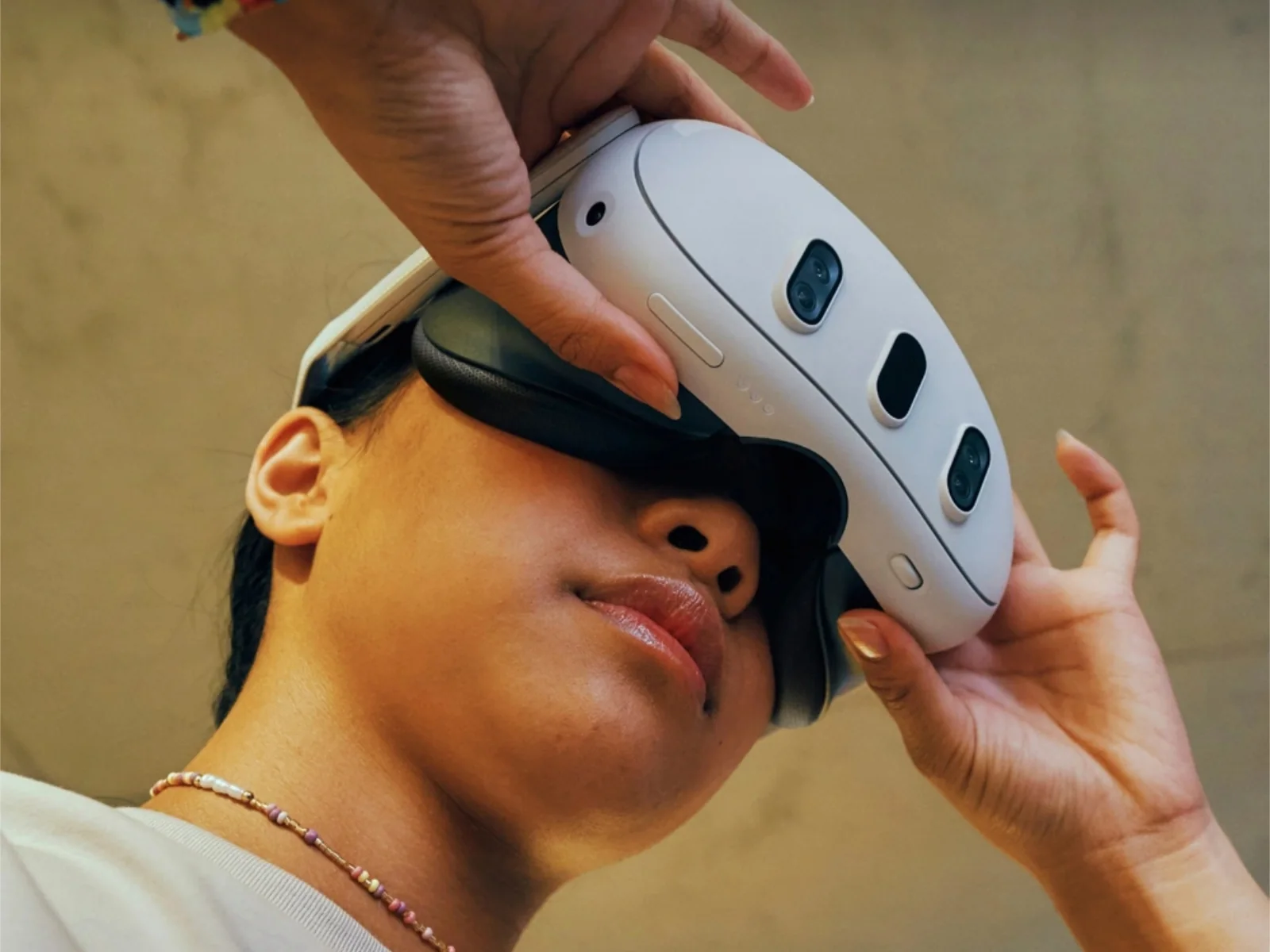
The approach isn't a guess. Kamyar studies neuroscience at Harvard and spent time in a VR-based vision lab, where he came across research that reframed what immersion can do: burn patients placed in a cold, snowy virtual world felt dramatically less pain during treatment. Their nervous systems responded to a place that wasn't physically there. If a virtual environment can blunt some of the most severe pain there is, a virtual natural world can give an ordinary stressful day a genuine moment of relief.
Why the two of us
Kamyar brings the neuroscience and the engineering: the grounding protocols, the headset, and the autonomous systems that make each session work. Jackson brings an economics and psychology background to the outreach, structure, and presentation that gets Valen VR into the libraries that need it. Between the two, the science and the access are covered.
How we got here
A discovery, traced in order.
The observation
Demand for mental-health support kept outpacing the staff and budgets available to meet it. The shortfall wasn't a hiring problem. It was structural.
The frontline
We kept landing on the same place: public libraries. Open to all, already trusted, already staffed for access, but with no tool for in-the-moment relief.
The mechanism
Research on virtual nature pointed to a self-contained answer: a guided, immersive grounding session that measurably calms the nervous system in minutes.
The constraint
It had to ask nothing of the building. No clinician, no scheduling, no training. If it added work, it wouldn't get adopted — so we engineered the work out.
Today
Valen VR runs autonomously across active installations, with thousands of completed sessions and a roadmap centered on the communities libraries serve.
Where the prototype stands today
average in-session calm rating
pilot survey · n = 25 (Harvard + BU)
7,500+
prototype sessions
~46
daily users
150+
feedback interactions
Valen VR prototype metrics, 2025
The team
A small group, accountable for the whole thing.

Kamyar
Technical Lead
Harvard neuroscience, with time in a VR-based vision lab. Kamyar owns the science and the systems end to end: the grounding protocols, headset setup, and the autonomous software that gets a unit live in a library in under a day.
Jackson
Outreach
An economics and psychology background applied to outreach, structure, and presentation. The partnerships with library directors and the funding frames that make adoption easy.
Operational values
The non-negotiables.
Absolute user privacy
Sessions are anonymous by design. No accounts, no personal data, no profiles. The headset forgets you the moment you set it down.
Accessibility compliance
We build to WCAG standards and design every interaction for first-time, all-ages, all-abilities use inside a public space.
Total autonomy
The system operates without staff. Scheduling, updates, and onboarding all happen on their own. The only human task is a lens wipe.